

When shopping for a manual espresso setup, understanding the debate between a spring lever vs manual lever espresso machine will define your entire morning routine. You should know the mechanical difference between a Manual (also called Direct Lever) and a Spring Lever before you buy it. The main difference between these two machines comes down to one simple question: what actually creates the brew pressure?
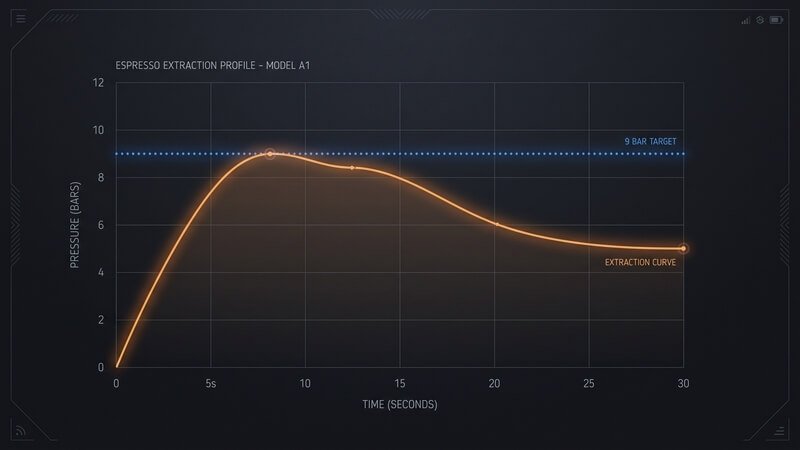
On a Direct Manual Lever, your arm muscles generate 100% of the brew pressure through a direct piston connection, giving you full real-time control over the water flow during the shot. On a Spring Lever, a heavy-duty mechanical spring sits compressed inside the grouphead; when you release it, the spring pushes the water automatically in a smooth declining pressure curve (usually starting around 9 bars and dropping to 5 bars). This gives you automated mechanical extraction without an electric pump.
If your daily goal is pulling identical, consistent shots every single morning without guesswork or physical sweat—especially when making back-to-back drinks—the Spring Lever is your best match. But if you want to geek out like a professional barista, control every second of the extraction, experiment with light roasts, and rescue choking shots in real time, nothing beats a Direct Manual Lever. Let’s dive into spring lever vs manual lever espresso machine differences so you can pick the perfect machine for your home espresso counter.
Quick Summary
ToggleQuick Verdict: Direct Lever vs Spring Lever at a Glance
- Direct Manual Levers: Best for home baristas who love experimenting with coffee beans, brew light roasts, want a budget-friendly setup, and crave direct physical feedback from the coffee puck.
- Spring Levers: Ideal for anyone who wants rock-solid daily consistency, thick syrupy Italian-style body, hands-free extraction, and an easy, relaxed morning routine.
- Extraction Profile: On direct levers, you control variable pressure manually anywhere from 0 to 12 bars. On spring levers, pure physics delivers an automatic declining pressure curve (sliding from around 9 bars down to 5 bars).
- Physical Effort: Direct levers demand 30 to 45 seconds of continuous arm muscle for every single shot. Spring levers only ask for a quick 2-to-3-second pull to compress the spring.
| Machine Type | Pressure Source | Extraction Profile | Morning Workflow | Best For |
|---|---|---|---|---|
| Direct Manual Lever | Manual Arm Force | Real-Time Control (0–12 Bar) | Active hands-on workout | Light Roasts & Coffee Geeks |
| Spring Piston Lever | Internal Compression Spring | Automated Declining Curve (9–5 Bar) | Effortless, hands-free pull | Daily Consistency & Milk Drinks |
Spring Lever Vs Manual Lever Espresso: The Core Engineering Difference
Both machines might look similar sitting on your kitchen counter, but understanding how manual lever espresso machines work reveals two completely opposite engineering philosophies for managing water and pressure.
Direct manual levers: direct arm-to-piston connection
On a direct manual machine, the lever connects straight to the piston shaft without any springs or gears in between. During the initial pre-infusion chamber fill, hot water floods the cylinder. When you push down on the handles, you feel the hydraulic pushback of the coffee puck right in your palms! This direct connection gives you instant puck feedback and tactile resistance.
While it does increase physical arm force requirements, it lets you feel whether your grind is slightly too fine. If the puck resists too hard, you immediately ease off your pressure to 5 or 6 bars, transforming a stalled extraction into a smooth, high-extraction turbo shot ratio instead of an undrinkable choke.
Spring levers: stored mechanical automation
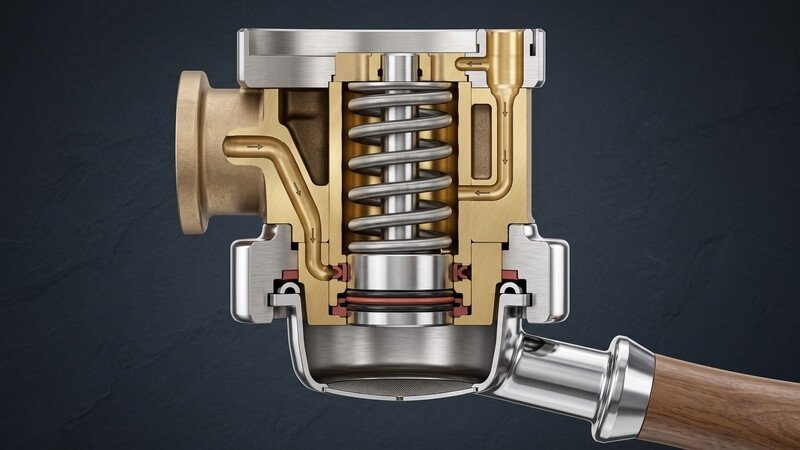
When evaluating a direct lever vs spring piston espresso machine, the mechanical difference sits inside the grouphead: one or two heavy industrial compression springs. Rather than relying on modern electric pumps, this piston design traces back to early mechanical espresso machine patents developed in Milan to create controlled brew pressure. When you pull the lever down, you are not actually pushing water through the coffee puck. You are compressing that heavy internal spring and letting hot water flood the brew chamber.
The moment you let go of the lever, the spring releases its stored energy and drives the piston downward automatically. This gives you a smooth, semi-automatic workflow. The pressure curve follows pure physics: governed by Hooke’s law of spring elasticity, the force drops linearly as the internal coil decompresses. You get peak pressure (around 8.5 to 9 bars) when the spring is fully compressed, and as the spring expands downward, the pressure smoothly drops down to about 5 bars by the end of your shot.
Extraction Performance: Dynamic Pressure Profiling vs Repeatable Geometry
Lever espresso is famous for its rounded body, low bitterness, and intense sweetness. However, the path to that flavor depends heavily on how each machine balances flow rate control against shot repeatability and consistency. Before the introduction of the lever piston mechanism in Milan, early coffee makers could only push steam at 1.5 to 2 bars. The development of high-pressure extraction fundamentally redefined the history and science of espresso, producing the dense emulsion of oils and microfoam we now recognize as crema. Today, direct levers and spring-piston designs achieve that signature sweetness through two very different mechanical approaches.
The physics of the declining pressure curve
Standard pump machines (vibratory or rotary) blast the coffee puck with a continuous, flat 9 bars of pressure for a full 30 seconds. The issue is that coffee grounds dissolve as water passes through them, which weakens the puck structure. In the final seconds of a shot, that harsh 9-bar blast punches micro-channels through the puck, dumping astringent bitterness into your cup.
Both lever styles solve this problem naturally through a declining pressure extraction curve. As the puck breaks down, the declining pressure maintains superior espresso channeling resistance. This pulls out the sweet, flavorful coffee oils while trapping the harsh bitter dust inside the basket. High-end digital machines use fancy software and expensive pumps to mimic this drop, but a heavy brass spring grouphead pulls it off using natural fluid dynamics—no computer chips required!
The "save-a-shot" advantage on direct levers
If you frequently switch between single-origin coffees and light roast profiles, dialing in on a standard pump machine can waste expensive beans. Dynamic manual pressure profiling on a direct lever acts as your ultimate bean-saver:
- If the shot runs too fast (under-extracted grind): Rather than blasting it at high pressure, you can ease off to 5 or 6 bars to maintain puck contact time, pull a gentle turbo-style ratio, and preserve sweetness without channeling.
- If the shot stalls or chokes (overly fine grind): You can drop your hand pressure down to 2 or 3 bars for an extended 20-second pre-infusion soak, letting the puck saturate fully before applying a gentle 6-bar pull to complete the extraction cleanly.
- Custom Pre-Infusion: You can gently soak the puck at 2 bars for 20 seconds, ramp up to 8 bars, and then finish at 4 bars. Normally, you only find this level of flow control on commercial digital machines costing upwards of $3,000. You get that same pro-level control on a direct manual lever for a fraction of the cost!
Daily Workflow: Morning Fatigue vs Mechanical Kickback Hazards
Beyond coffee flavor, your daily kitchen workflow and safety will shape how much you love your machine.
Ergonomics and multi-cup brewing
- Direct Levers: Pulling a single shot on manual presses like the Cafelat Robot or Flair 58 feels like a fun, satisfying morning ritual. But if friends come over and you need to pull three or four back-to-back lattes, pressing down with 15 to 20 kilos of force for 40 seconds on every shot quickly turns into an intense arm workout! You get great coffee, but you pay for it in sweat and time.
- Spring Levers: Spring machines make entertaining guests and rushing through busy mornings easy. You pull the lever for two seconds, let the spring handle the extraction hands-free, and use that time to steam milk or wipe down your counter. If you want great coffee with zero sweat, a spring lever works way faster than a direct manual press.
The overlooked hazard: spring recoil (Lever Kickback)
Spring-lever groupheads store a massive amount of mechanical energy. If you pull the lever down without a loaded portafilter locked in (or if water cuts a massive channel through your puck, eliminating all resistance) and let go, the handle will experience violent lever recoil / dry snap-back, snapping upward like a loaded mousetrap! Always keep safety front and center.
Barista Safety Note: Never let go of a spring lever handle until you actually feel the water catch resistance against the coffee puck. A dry, flying spring lever can smash your face or damage your machine. While both designs excel in long-term mechanical durability and maintenance, direct manual levers store zero potential energy and carry zero kickback risk.
Thermal Mass: Commercial Brass Groups vs Open Cylinders
Temperature stability shapes your coffee flavor just as much as grind size, and these two machine styles handle heat in totally different ways.
Commercial groupheads (Heavy Thermal Mass)
Most spring lever machines pack a massive 58mm solid brass grouphead weighing anywhere from 6 to 10 kilograms.
- The Benefit: Once fully heated, this heavy grouphead thermal mass achieves complete brass saturation. It keeps your brew temperature rock-solid across multiple back-to-back shots.
- The Downside: Heating all that thick metal properly takes 25 to 40 minutes of warm-up time before you can brew your first cup.
Minimalist manual assemblies (Quick Heating)
Modern direct manual levers use compact, low-mass brew cylinders.
- The Benefit: Machines like the Flair 58 use active electric heating elements, reaching brewing temperature in under 10 minutes.
- The Downside: Purely mechanical presses without electric heating elements require a manual preheating routine with boiling water, especially for light roasts, so your shots do not turn out unpleasantly sour.
Frequently Asked Questions
Can you get a full 9 bars of pressure from a direct manual lever?
Yes, absolutely! As long as you dial in your grind and prep your puck properly, any adult barista can easily generate 6 to 9 bars of pressure on a Cafelat Robot or Flair 58 using basic body weight and leverage.
Why do spring lever machines use declining pressure instead of flat pressure?
The internal spring exerts its peak spring decompression force (around 9 bars) at full compression. As it expands downward to drive the water through the puck, the mechanical force naturally declines, dropping smoothly from 9 bars to around 5 bars by the end of the extraction. This smooth drop from 9 bars to 5 bars matches how the coffee puck dissolves, preventing channeling and harsh bitterness at the end of your shot.
Is a lever espresso machine hard to use for beginners?
No, direct manual levers have a steeper learning curve because shot quality depends on your manual force and grind precision. But spring levers are much easier for beginners because the spring automates the pressure profile, requiring only a simple 2-second lever pull.
Are spring lever espresso machines dangerous?
Under normal daily use, spring lever machines are completely safe. Danger only appears if you pull the lever down without coffee resistance and slip your hand off the grip. That makes the heavy handle fly upward violently. As long as you check for water resistance before releasing your grip, you run zero risk.
Do direct manual lever machines make real espresso?
Yes, they make 100% genuine espresso! Because they hit standard 9-bar pressure and use non-pressurized commercial baskets, they produce rich crema, thick syrupy body, and flavor clarity that easily matches—and often beats—massive commercial pump machines.
Bottom Line: Which Lever Machine Fits Your Countertop?
When weighing a spring lever vs manual lever espresso setup for your kitchen counter, the choice is not about which machine pulls ‘better’ espresso. When comparing the pros and cons of spring lever coffee makers against direct manual presses, both deliver sweet, low-bitterness shots using a natural declining pressure curve that flat 9-bar pumps cannot match. Your real choice comes down to how much physical work, hands-on control, and fun you actually want in your daily morning coffee routine!
Buy a direct manual lever if:
- You love playing coffee scientist: You brew light roast specialty beans, want 100% control over flow-profiling on every single shot, and want the power to drop the pressure in real time to rescue a choking puck from going straight down the sink.
- You want smart, focused spending: You want commercial-grade 58mm espresso quality for $150 to $500 without worrying about circuit boards frying or boilers breaking down.
- You want zero mechanical jump-scares: You want zero loaded spring tension and zero risk of a metal lever snapping back at your face.
Buy a spring lever machine if:
- You want effortless morning consistency: You want identical, repeatable espresso shots every single morning without wearing out your arm muscles before your first sip.
- You make milk drinks for visiting friends: You want hands-free brewing so you can pull the lever once, let the spring push the shot automatically, and steam silky milk at the exact same time without breaking a sweat.
- You crave that classic Italian coffee bar feel: You love thick syrupy texture, deep golden crema, and the rock-solid temperature stability of a heavy brass grouphead with old-school mechanical reliability.
Whichever design you pick, stepping away from standard flat-pressure pumps and into lever-driven espresso is easily one of the biggest upgrades you can make to your daily cup. If you want to set up an espresso bar at home, you can find plenty of help in our guide, “How to Put Together the Perfect Home Espresso Bar.“