

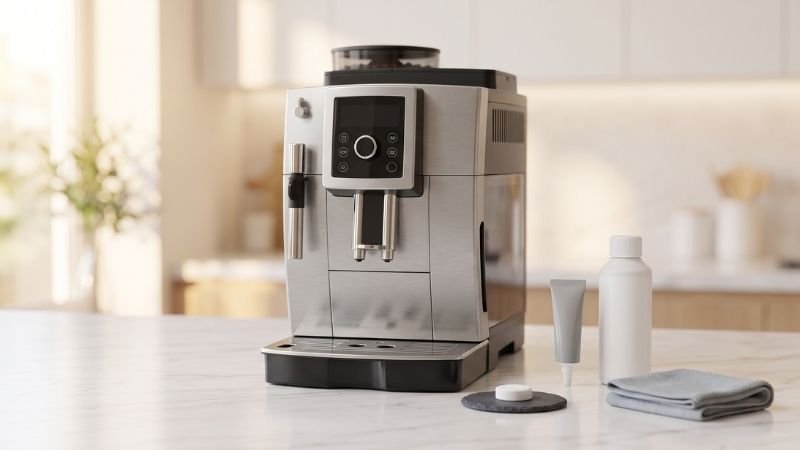
Learning how to clean a super automatic espresso machine comes down to three non-negotiable steps: purge the milk system and empty the wet puck container every day, wash the removable brew group under lukewarm tap water without soap every week, and run a coffee oil degreasing tablet cycle along with a dedicated lactic acid descaler every month.
If you do not take care of your expensive espresso machine and skip this schedule, the damp heat trapped inside the closed body will breed fungus and mold within 24 to 48 hours. Old, rancid coffee oils will cake onto the shower screen, and calcium scale will choke the narrow 1.5mm water channels inside the thermoblock, permanently killing the heater and pump.
You definitely do not want your expensive espresso machine to break down, and you do not want to drink coffee brewed through hidden mold and fungus! That is why I explained every single cleaning step in detail in this guide, so you can enjoy great coffee and protect your machine from costly damage.
Quick Summary
ToggleComplete Super Automatic Espresso Machine Maintenance Schedule
| Frequency | Target Component | Primary Action | Cleaning Agent / Tool | Key Benefit |
|---|---|---|---|---|
| Daily | Milk Lines, Puck Bin & Drip Tray | Purge steam, dump spent grounds & dry sump | Warm water & dry microfiber cloth | Prevents milk crust, mold & bacteria |
| Weekly | Brew Group (Removable or Sealed) | Rinse under tap or run machine tablet cycle | Lukewarm tap water (no soap) or OEM tablet | Removes loose coffee grinds & fines |
| Monthly | Shower Screen, Valves & Thermoblock | Degrease coffee oils & dissolve mineral scale | Alkaline cleaning tablet & lactic acid descaler | Eliminates rancid taste & unblocks flow lines |
| Quarterly | Brew Unit Guide Rails & EPDM O-Rings | Lubricate rubber seals & sliding mechanical tracks | NSF-H1 food-grade silicone grease | Stops motor strain, squeaks & pressure leaks |
Architectural Identification: Removable vs. Sealed Brew Units
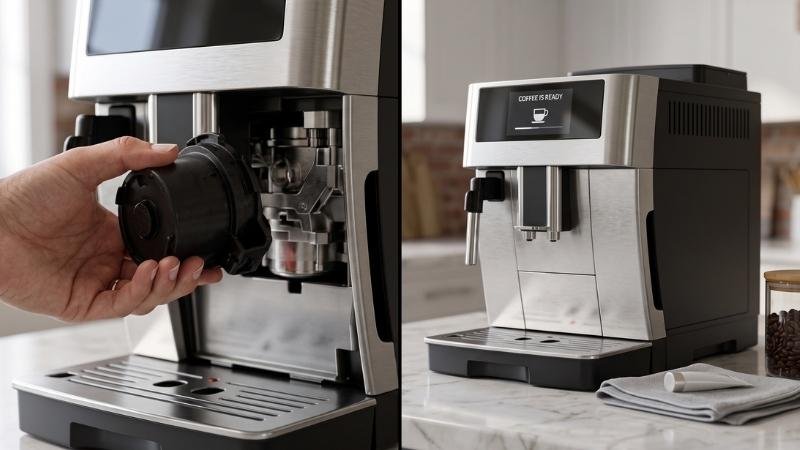
Before you touch a single button or grab any cleaning tools, you must check which internal setup your machine uses, because both types demand completely different care:
- Removable Brew Groups (De’Longhi Magnifica, Philips Series 1200 to 5400, Gaggia Anima): If you own one of these, you will see a small door on the front or side. You simply open the hatch, squeeze the colored latches, pull the entire mechanical block straight out, and inspect it right in your sink.
- Sealed Brew Groups (Jura E-Line/Z-Line, Krups): Manufacturers seal these brew groups permanently inside the chassis. Never force the casing screws open! These machines clean themselves using an automated, tablet-based backwash cycle, and taking them apart will only damage your machine.
Note: To clean both types of machines, read the next section, “Weekly Maintenance: Cleaning the Extraction Core (Both Machine Types),” where you will find a step-by-step cleaning guide for both setups.
Daily 60-Second Hygiene Routine (Preventing Milk Biofilm & Mold)
The easiest way to keep your machine alive is a quick daily wipe-down. Follow these three steps at the end of every coffee session so bacteria never build up on your internal plastic and silicone lines:
- Auto-Purge the Milk Circuit: Hit the automatic steam purge button within 5 minutes of making a milk drink (such as a latte or cappuccino). If your machine uses an external silicone tube, drop the tip into a cup of warm water and blow steam through it for 5 seconds to stop dried milk crust from forming.
- Dump the Wet Puck Container: Never leave wet coffee pucks sitting inside the machine overnight! The leftover heat from the boiler combined with wet coffee grounds creates fuzzy green fungus and nasty mold spores in less than 24 hours.
- Wipe the Drip Sump: Empty your drip tray every day and wipe it down with a dry cloth so slimy, standing water never forms a smelly bacterial film on the base plate.
Weekly Guide: How to Clean a Super Automatic Espresso Machine (Removable vs. Sealed)
Because super automatic machines use two totally different internal designs, you clean them in two distinct ways to keep everything safe:
Method A: Cleaning a Super Automatic Brew Group Step by Step (De’Longhi, Philips, Gaggia)
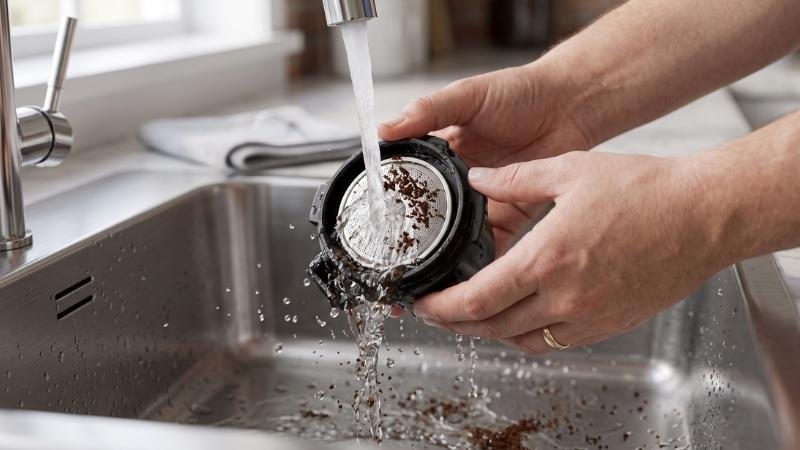
When cleaning a super automatic brew group step by step, follow this quick weekly sink routine if your machine features a side or front service door:
- Safe Standby Shutdown: Turn the machine off using the front power button first so the brew group parks safely in its home position.
- Lukewarm Water Cleanse: Pull the unit out and rinse the shower dispersion screen and brew chamber under your sink tap using lukewarm water (35°C–40°C).
- No Soap Rule: Never use regular dish soap, detergents, or the dishwasher on this part.
- Air-Dry Clearance: Set the brew group horizontally on a clean towel and let it air-dry completely for 4 to 6 hours before sliding it back inside.
Method B: Sealed Brew Unit Maintenance (Automated Clean Cycles for Jura, Krups)
If you own a Jura or Krups, leave the screwdriver in your toolbox! You run an automated cleaning cycle instead:
- Trigger Maintenance Cycle: Select “Clean” from your menu or wait for the screen to flash the “Clean Machine” prompt.
- Empty Drip Tray: Pull out and empty the drip tray and grounds container when the screen tells you to.
- Drop Cleaning Tablet: Drop one specialized 2-phase or 3-phase cleaning tablet straight into the pre-ground bypass chute on top.
- Run 15-Minute Flush: Place a 500ml container under the coffee spouts and press start. Your machine pulses 80°C hot water through the system, chemically stripping away baked-on oils and rinsing itself clean with zero manual effort.
Monthly Deep Cleaning: Oil Degreasing and Descaling Protocols
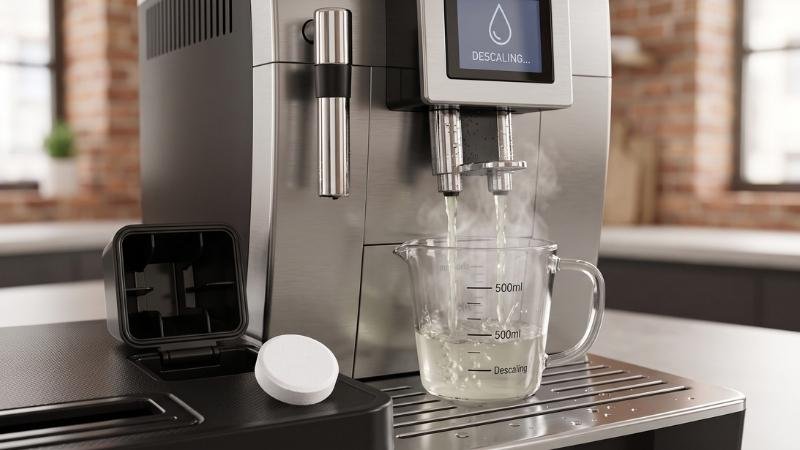
A monthly deep clean chemically strips two different troublemakers from your machine: baked-on coffee oils (which make your espresso taste bitter and rancid) and rock-hard mineral scale (which clogs the tiny water lines inside the heater). Tap water alone cannot dissolve either of them, so you must run two separate chemical cycles every 30 days.
Protocol A: How to Use Espresso Cleaning Tablets in a Super Automatic Machine (Alkaline Tablet Cycle)
Mastering how to use espresso cleaning tablets in a super automatic machine strips sticky, baked-on coffee oils from the shower screen, internal valves, and dispensing spouts without scratching precision plastic parts.
- Drop one dedicated espresso cleaning tablet (like Urnex Cafiza or your brand’s official tablet) into the pre-ground bypass chute.
- Put a 500ml container under the coffee spouts.
- Pick the “Pre-Ground Coffee” setting and start a brew cycle without adding any real ground coffee.
- Pause the cycle halfway through so the foamy cleaner can soak into the shower screen and piston seals for 5 minutes.
- Finish the cycle, then run two plain water brew cycles to flush out every bit of leftover cleaning solution.
Protocol B: How to Descale a Bean to Cup Coffee Maker (Acid Solution Cycle)
Understanding how to descale a bean-to-cup coffee maker with proper acid ratios melts rock-hard calcium carbonate and magnesium scale out of the heating element and narrow 1.5mm water passages. Dissolving scale buildup restores precise thermal stability and water flow back to standard espresso extraction parameters, ensuring your shots extract sweet and balanced instead of sour and under-temp
- Remove Ion-Exchange Filters: Take the resin or carbon water filter (such as a Philips AquaClean or a Jura Claris) out of the water tank first! Acidic descaler ruins filter resin permanently.
- Descaling Solution Formulation: Pour your commercial lactic acid or citric acid descaler into the water tank, then add fresh water up to the marked “Calc/Clean” line.
- Run Automated Pulse Cycle: Start the descaling cycle from your settings menu. The machine pulses fluid through the thermoblock for 20 to 30 minutes to dissolve the scale.
- Final Fresh Water Flush: Rinse the water tank thoroughly, fill it with fresh filtered water, and run a full-tank flush to wash out any leftover sour acid taste.
How to Lubricate an Espresso Machine Brew Unit: Mechanical Gearbox & O-Ring Lubrication (Quarterly)
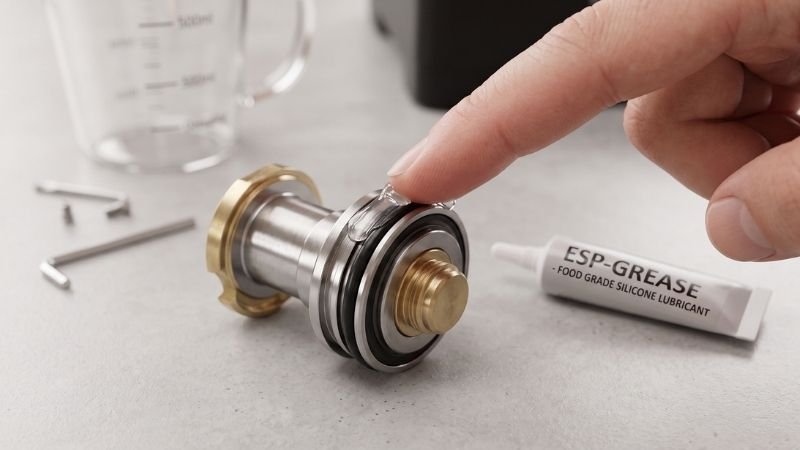
Knowing how to lubricate an espresso machine brew unit every 4 to 6 months (or roughly every 500 cups) protects the sliding tracks and rubber O-rings from friction wear caused by constant hot water rinses. Over time, high 9-to-15-bar extraction pressure and routine rinsing wash the factory grease away. If you run your machine on dry seals, your drive motor works twice as hard, the machine squeaks loudly while tamping, and water pressure leaks past the puck.
- Identifying Symptoms: If your machine squeaks, whines, or sounds like it is groaning under heavy strain while tamping, your O-rings are bone-dry.
- Permitted Lubricant: Use only NSF-H1 or USDA-H1 certified food-grade silicone grease (like Haynes lube or your machine’s brand-specific tube). Never use cooking vegetable oil, petroleum jelly (Vaseline), or WD-40! They turn rancid, ruin rubber seals, and you definitely don’t want to drink them.
- How to Apply: Spread a thin film of grease around the main black rubber O-ring on the brew group, rub a light layer onto the side guide rails with your finger, and wipe off any extra lube with a clean cloth so loose coffee dust doesn’t stick to it.
The Vinegar Warning: Why Acetic Acid Destroys Internal Thermoblocks
Friends might tell you to clean your machine with cheap white vinegar, but please do not do it! Vinegar acts like poison inside a super automatic machine:
- Corrodes Aluminum Thermoblocks: The harsh acetic acid in white vinegar strips away the protective coating inside aluminum boilers, chewing tiny pits into the metal and dumping a nasty metallic taste into your morning cup.
- Degrades Internal Seals: High acidity hardens and cracks rubber EPDM gaskets and silicone O-rings. Once they crack, water leaks inside the housing and fries your expensive main circuit board.
- Leaves a Stubborn Stench: Acetic acid soaks into the microscopic pores of your silicone water tubes, taking more than 20 rinse cycles to wash out the smell. Stick to odorless lactic acid descalers (like De’Longhi EcoDecalk) or citric acid solutions instead.
Frequently Asked Questions (FAQs)
Can I run a descaling cycle with the water filter installed?
No. Always remove your water filter from the tank before you start. The strong descaling acid damages the tiny filter beads and dumps trapped minerals right back into your clean water lines.
Why does my coffee taste sour or bitter even with fresh specialty beans?
Old, baked-on coffee oils on the shower screen or hidden patches of mold inside the damp corners of your brew group usually create these sour, metallic off-flavors. Rinsing your brew group weekly with warm water and running a monthly cleaning tablet cycle will dissolve those rancid oils and restore fresh coffee flavor.
How often should I lubricate the brew group tracks and O-rings?
Apply food-grade silicone grease every 4 to 6 months, or roughly every 500 cups of coffee. If you rinse your brew group under warm water multiple times a week, that grease washes away faster. If you hear a loud squeak or the motor groans during a shot, grease the seals immediately.
Can I put my removable brew group into the dishwasher?
Never put your brew group in the dishwasher! The intense drying heat warps the plastic rails out of shape, and harsh dishwashing pods wash away all the factory lubricants while drying out the rubber O-rings.
Final Words - Mastering Super Automatic Espresso Machine Maintenance for the Long Run
Following this comprehensive super automatic espresso machine maintenance routine keeps your coffee tasting as it came from an Italian cafe. Now that you understand exactly how to clean a super automatic espresso machine—from daily 60-second flushes to quarterly silicone greasing—you can prevent expensive repair bills and enjoy flawless espresso for years to come. In this step-by-step cleaning and maintenance guide, I covered everything you need to boost your machine’s lifespan and brew delicious coffee every day.
Your machine’s mechanical health and coffee flavor come down to a quick 60-second daily purge and a regular monthly descaling routine. Following this easy schedule saves you from expensive motor breakdowns and leaking pumps, keeping every cup tasting as it came from a specialty cafe. These cleaning habits take barely any time, but they save you serious cash in the long run.
Also, if you want to set up an espresso bar at home and don’t know where to start, read our guide, “How to Put Together the Perfect Home Coffee Station,” to build your dream coffee corner. Have a fantastic day, and enjoy your coffee!