

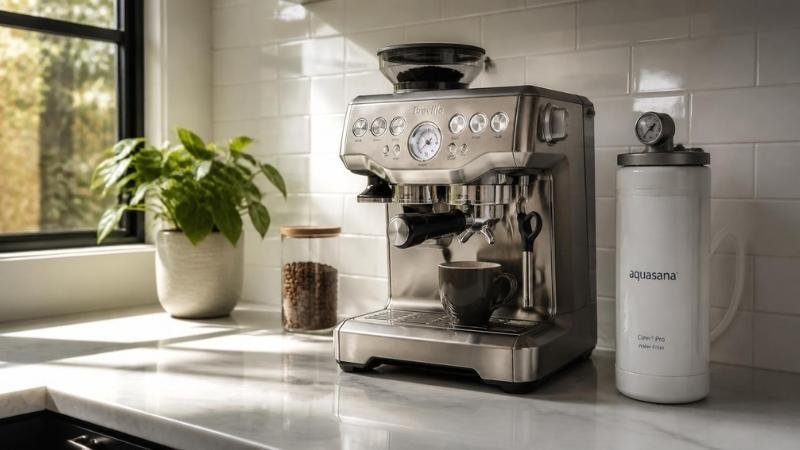
The direct answer to your question is a simple “No.” Let’s talk about this in detail and see why using your coffee machine without a filter is not okay. In my research, I found out that most people in a morning rush just pour regular tap water straight into the tank without a coffee machine water filter. The water looks clean, and it still makes coffee, right?
But if you read the experiences of real-world espresso experts, they say running water without a filter is like a “Slow Poison” for the machine. If you use an espresso machine without a filter, you are not just making coffee; you are actually starting a death countdown for your expensive machine.
In this guide, we will talk about the hidden dangers of using a coffee maker without a water filter, which can heavily hurt your pocket and your coffee. No boring talk—let’s get straight to the point!
Quick Summary
ToggleThe Chemistry of Tap Water: Invisible Minerals and the Heat Trap
I found out in my research that your tap water might look crystal clear, but a lot of things are hiding inside it on a microscopic level. There is no doubt that this water is totally safe for you to drink, but the story completely changes when this regular tap water goes inside a coffee machine. To achieve proper extraction balance, official SCAA data shows that water must maintain an exact mineral count and zero chlorine to protect high-tech heating components
Invisible minerals
Tap water has invisible minerals that you cannot see with your eyes. Unfiltered water is full of floating calcium and magnesium particles, and trust me, they are definitely not good for the taste of your coffee.
Chemical additives
You might not know this, but tap water contains chlorine, which is added just to keep the water clean. While this water is fine for normal drinking, these chemical additives are really bad news for metals.
Extreme heating effect
Here is another thing you should know: your machine’s boiler heats water up to more than 200°F. Because of this extreme heat, the water turns into steam and leaves all those minerals behind. These minerals turn into micro-crystals, which quickly ruin both the taste and quality of your coffee.
Limescale Inversion: The Secret Espresso Machine Killer
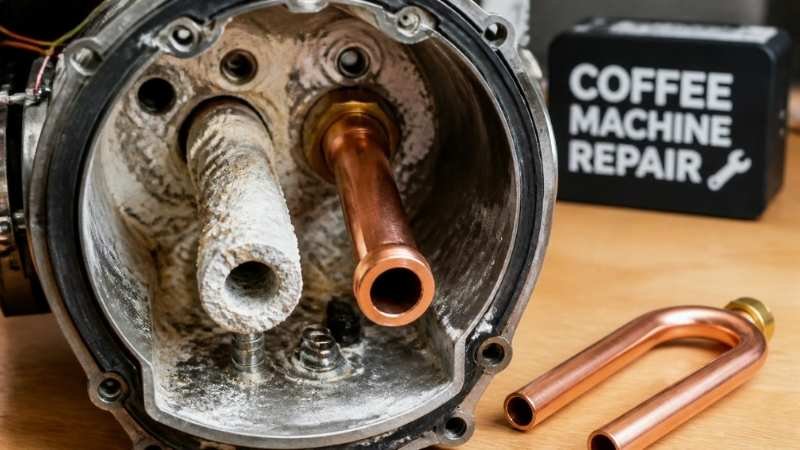
Like many people, you might think that boiling water makes it completely clean, but the truth is the exact opposite. When tap water hits the copper or stainless steel boiler tank inside your machine, the extreme heat instantly turns those hidden minerals into micro-crystals. In this section, I will show you how this chalky layer quietly destroys your machine from the inside out if you are not using a coffee machine water filter.
How limescale in espresso machine destroys your boiler
You should know that the biggest problem with using unfiltered water for coffee is limescale buildup. When the calcium and magnesium in tap water stick to the boiler’s heating element, they form a chalky, rock-like layer. This limescale in espresso machine is very bad for your setup. In simple words, this acts like an unwanted blanket (thermal insulation) over the heater, and it completely ruins the taste of your coffee.
- Higher power bills: If limescale builds up inside your coffee maker, the boiler has to work twice as hard just to heat the water. This means your machine will gulp down way more electricity, and you will get a huge power bill—something nobody wants to see!
- Metal fatigue: When your machine works too hard and gets pushed to its limits, the heating element gets so dangerously hot that it will crack from the inside. The limescale in espresso machine can easily destroy your expensive coffee setup.
- Total component failure: If things get even worse, your pricey machine will give up and permanently die within a few short months due to calcium buildup and magnesium deposits. It will stop turning on completely, leaving you with no morning coffee at all!
The Taste Paradox: Why Expensive Coffee Beans Taste Sour
I saw in my research that so many people spend big money on expensive coffee beans, but they still complain that their coffee tastes sour or releases bitter oils. The real problem here isn’t your beans at all—it’s your unfiltered tap water in your coffee maker, which is packed full of nasty chemical compounds. Let me show you exactly how this heavy mineral water completely ruins your brewing process and destroys the taste.
Why hard water ruins coffee extraction
Does it hurt your feelings when you buy an expensive bag of premium coffee beans, but your coffee ends up tasting sour, bitter, or like plain mud? You should know that 90% of your coffee cup is just water. When your tap water is already packed with heavy minerals, it cannot absorb the good flavors from the beans. In the end, you completely waste your money on those pricey coffee beans.
The over-saturated water trap
If your tap water is already full of heavy minerals, it simply runs out of room to dissolve the good coffee solids. Since there is no space left in the water, this distilled water trap cannot pull out the rich flavors you actually want to taste. According to international brewing guidelines, specialized water requires a tightly balanced mineral threshold to achieve total flavor clarity without causing metal damage.
Loss of sweet oils
Unfiltered water blocks the coffee from releasing its natural sweet oils and tasty aromas. So, even if you buy the most expensive coffee on the market, you still end up drinking a sad, flavorless cup.
The solution: the filter effect
When you use a good coffee machine water filter, it cleans the water and makes it “hungry.” This clean water can easily pull the absolute best flavors out of your beans after good coffee extraction. It guarantees you a delicious morning cup that actually starts your day on a great note!!! If you are ready to filter your tap water, read our breakdown of the best water filter options for Breville, De’Longhi, and plumbed espresso setups.
Flow Rate Blockage and Sensor Corrosion
You should know that modern espresso machines are not just simple metal boxes anymore; they are packed with tiny, computerized parts. When you use unfiltered water to make your coffee, these tiny internal pipelines are the very first target for damage. While water looks crystal clear out of the tap, but USGS environmental mapping shows that municipal supplies carry high levels of dissolved calcium carbonate minerals.” In this section, I will show you exactly how that mineral scaling attacks the most delicate areas of your system.
The attack on delicate internal parts
You probably know that modern espresso machines (like Breville, De’Longhi, or Gaggia) have super tiny parts inside that can clog very easily. When unfiltered water forces its way through these narrow pipelines, the destruction begins, and the risk of ruining your expensive machine goes through the roof.
- Flow meters clogging: Without you even noticing clogged pipelines, microscopic dirt and mineral scales build up quietly inside the machine and block tiny lines completely.
- Pressure drop: When this clogging kicks in, the first thing you will notice is your machine losing its pressure. Your coffee starts dripping out painfully slow, making you wait forever for your morning fix.
- False alarms: After using tap water for a while without a coffee machine water filter, mineral rust covers the internal sensors. This messes with your machine’s brain, making it show wrong lights or random error codes on the screen, which turns your morning coffee routine into a total headache.
The Descaling Solution Trap: Why Vinegar Can Destroy Your Solenoid Valves
Like many people, when your machine starts blocking up, you might look for quick kitchen hacks and grab a bottle of white vinegar. This is a very dangerous mistake that can permanently break your machine—something you definitely do not want to see happen! Let’s discuss why vinegar and other cheap cleaning or descaling solution hacks create huge threats for your high-tech coffee setup.
Why kitchen hacks are dangerous for coffee makers
I found out in my research that when people see their machine getting blocked, they look for a cheap fix rather than using a coffee machine water filter. They dump regular white vinegar into the machine to clean it out. But professional repair guys give a strict warning against this, and it is a really bad idea.
The flake explosion
When you use vinegar, it does not actually melt the hard water scale away completely. Instead, it breaks off big chunks and rocks of scale that float into the small pipes and block the solenoid valves completely. This is super bad for your machine.
Acid damage
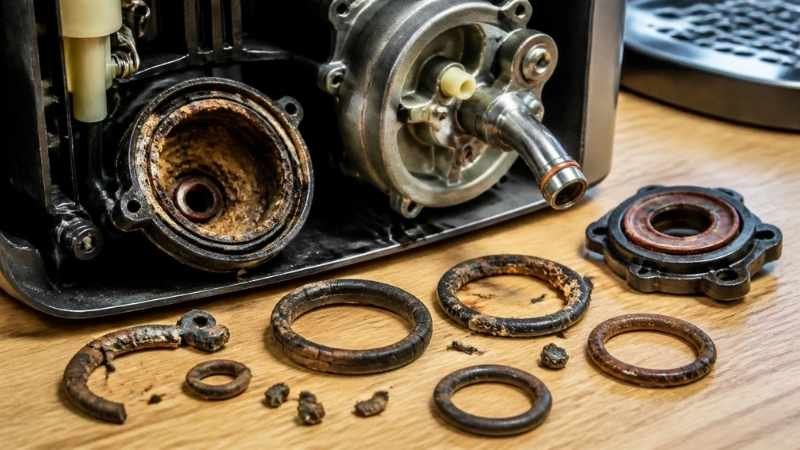
You should know that the strong acid in vinegar also eats away the soft rubber gaskets and O-rings inside the machine, as per appliance repair technicians’ guidelines. This can easily start a hidden water leak inside your setup.
The lingering stink
The smell of vinegar stays inside the machine for a long time. For the next 20 cups of coffee, you will taste and smell sour vinegar in your drink, and nobody wants to start their morning with stinky coffee!
Legal Realities: How Unfiltered Water Voids Your Warranty
Did you know that coffee machine companies run full engineering tests on your machine? When you call them for a repair, they have clear ways to track your water usage, and they use that data to decide if they will accept or reject your warranty. Let’s discuss how these hidden inspection rules from big brands can easily crush your wallet.
The hidden inspection rules of brands
You might not know this, but companies never talk about this openly. When your machine breaks down while it is still under warranty and you send it to the service center, they check it very carefully in their own way.
- Boiler diagnostic test: The first thing the company technician does is inspect the boiler tank and the group head to look for mineral deposits, and they run a full test on them.
- Instant void policy: If they find any limescale or mineral rust in there, they will reject your warranty claim immediately. They will straight up tell you that you used hard tap water in the coffee maker and failed to maintain the filter according to the manual. This is a huge setback for your expensive machine, so using a coffee machine water filter is a better idea.
- Out of pocket cost: Because of this mistake, the company cancels your warranty instantly. You will have to pay a heavy amount of money out of your own pocket for repairs and spare parts, which is the last thing you want to see happen!
Water Testing: Do You Actually Need a coffee machine water filter?
One thing is totally true: the water structure in every area is completely unique, and maybe your neighborhood actually gets a softened water supply. But you do not need to send your water to expensive labs to find out the truth. You can easily check your water right at home using some simple methods, and you can solve this problem by yourself in your own kitchen without a coffee machine water filter!
How to test hard water for coffee and fix your water at home
You should know that the water is not the same in every city or area, and maybe your tap water is actually okay for your machine. If you are not sure if your home water is safe for your espresso machine, just try these simple steps:
The kettle test
If you want to test your water yourself, take a look inside your home electric kettle or around the corners of your shower head. If you see a white, chalky powder sitting there, your water is hard, and you absolutely need to use a water filter.
Built-in cartridge
If your machine manual says it is okay and the company allows it, always fit the company’s original coffee machine water filter inside your water tank and keep it there.
The external filter jug hack
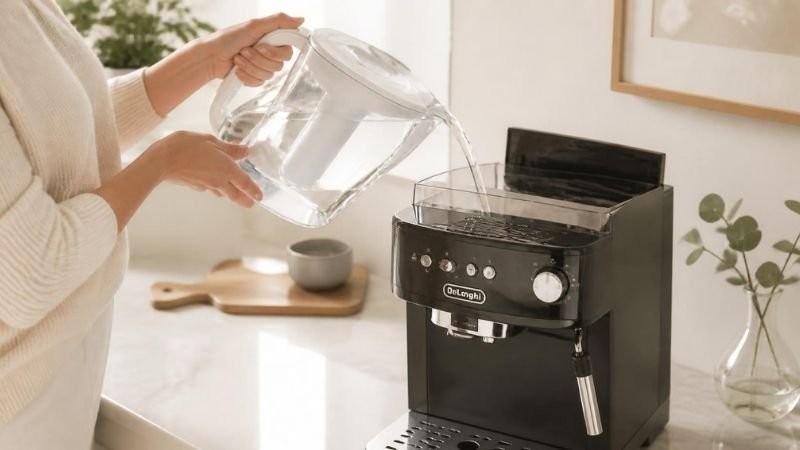
If you prefer a simpler way or if your coffee maker does not have space inside the tank, buy a Brita or ZeroWater filter jug. Pour your tap water into that jug first, let it filter, and then put that clean water into your espresso machine tank to enjoy great coffee.
Wrap Up: Does Tap Water Ruin an Espresso Machine?
You can technically run your coffee machine without a water filter, but it is a really bad practice. Look at it this way: running an espresso machine with tap water is exactly like taking your car on a long road trip without checking the engine oil first. In the beginning, everything feels totally fine.
But at the very end, you get hit with a massive bill because your car needs a super expensive repair. If you want to keep the rich flavor of your espresso and protect your money for many years, start using a coffee machine water filter today—your machine will literally thank you!
I really hope you liked this guide and finally got your answer on why you shouldn’t use a coffee maker without a water filter. If you want to build an amazing espresso bar at home but have no idea how to manage everything, go read my other guide called “How to Put Together the Perfect Home Espresso Bar.” It will give you a ton of help to get started!